
The UK graduate job market is facing its toughest period in years. With employers cutting back on entry-level hiring and applications per vacancy rising sharply, the pressure on early-stage assessments has intensified. Video interviews, already used by the majority of major employers, now determine who progresses and who is filtered out. Yet the uncomfortable truth is this: low interview confidence is quietly shutting thousands of students out of opportunities before their potential is ever seen.
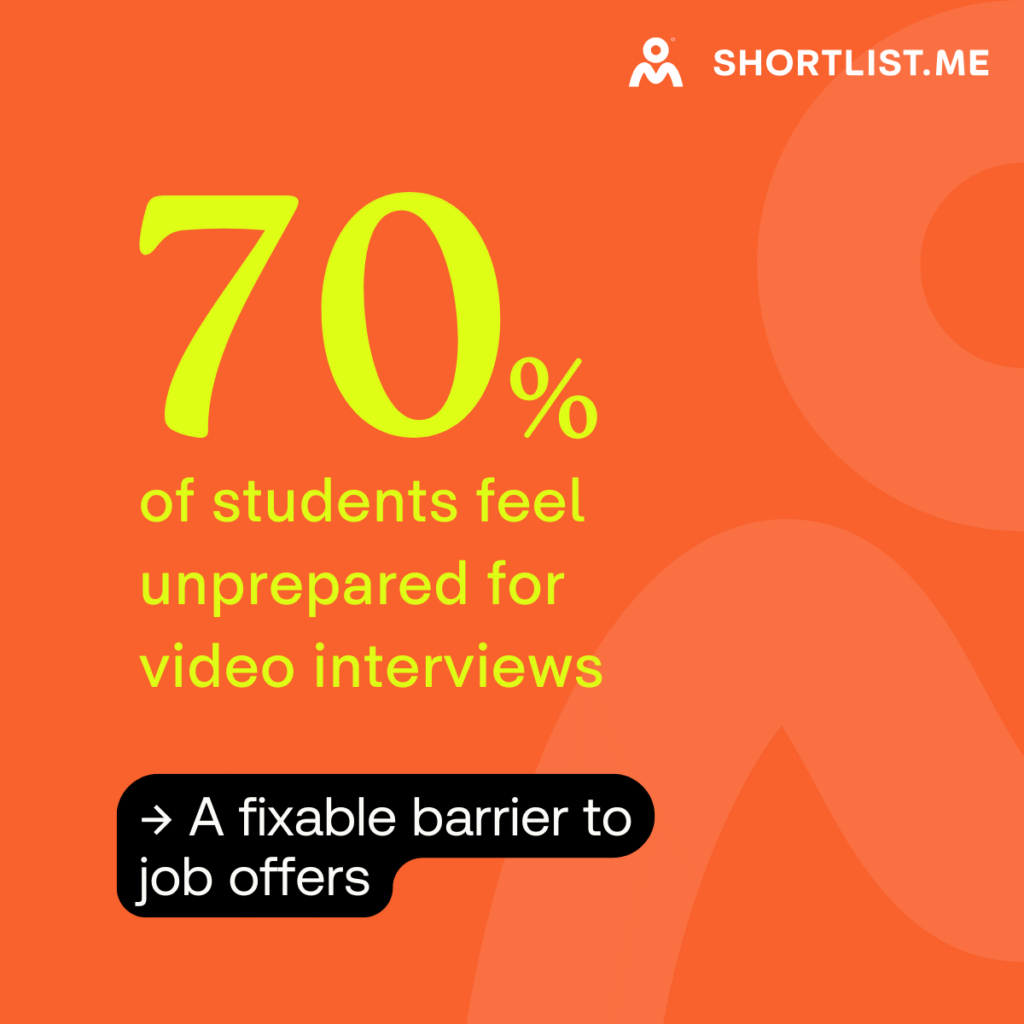
Shortlist.me’s Confidence Index, built on insights from over 25,000 students across 60 universities, reveals the scale of this confidence gap. More than 70% of students begin their first video interview practice feeling unsure of how to perform well. This lack of familiarity drives hesitation, poor structure, weaker delivery, and ultimately lower performance, long before ability, motivation, or academic achievement come into play.
But the data also makes something else clear: confidence is highly trainable.
Students completing just one realistic practice interview see an immediate 30% uplift in reported confidence. Those with some prior experience progress rapidly into the “High Confidence” bracket after additional practice. And the impact isn’t just individual. Before engaging with the platform, only 1 in 60 universities had any students in the “High Confidence” category. After structured practice, that rises to 14 in 60.
At a time when employers are using video interviews as a primary filter, this matters. A student who enters that process unconfident from lack of exposure, fear of the format, or uncertainty about what “good” looks like, is more likely to underperform, speak less clearly, miss key points, and struggle to convey their strengths. In a market this competitive, that performance drop translates directly into higher rejection rates.
What’s more, our data shows that 65% of students using Shortlist.me had not previously engaged with their careers service. These are the very students most likely to feel underprepared and, therefore, miss out.
By working alongside university careers teams, structured practice tools help bridge this gap: widening participation, building competence, and boosting students’ readiness at scale. The confidence problem is real, but it is also fixable.
In a shrinking job market where every stage of recruitment counts, students deserve the chance to perform at their best, not be held back by an unfamiliar format. For universities committed to improving outcomes, and for individuals wanting to stand out, realistic interview practice offers one of the clearest and fastest routes to stronger performance and better results.